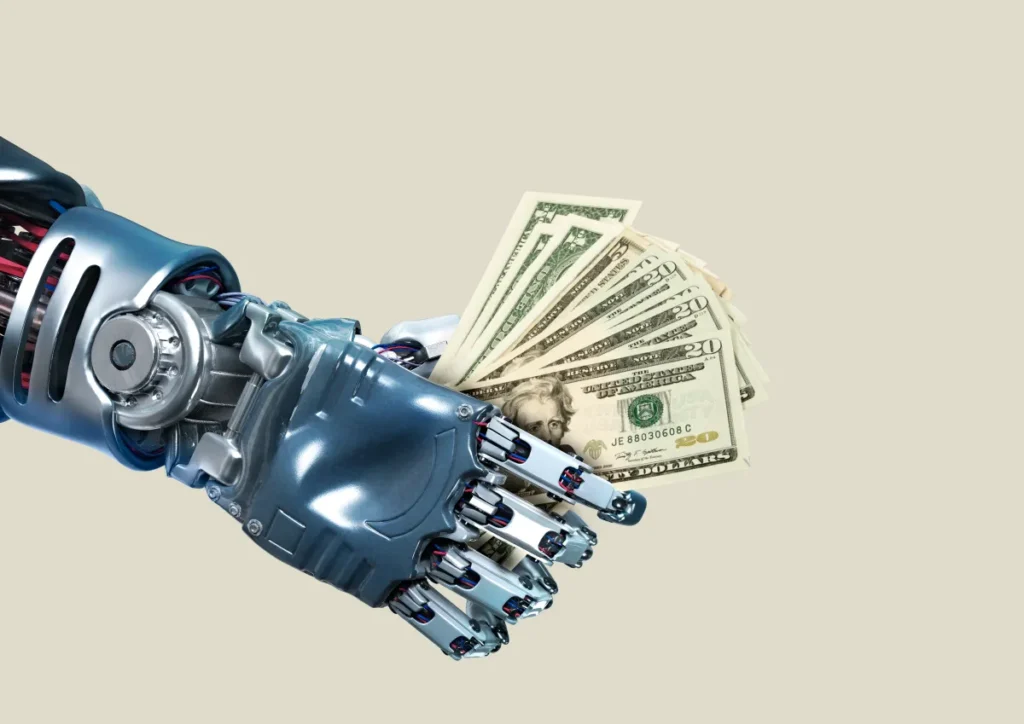

Tokenmaxxing was the hottest trend in Silicon Valley earlier this year, with CEOs encouraging employees to push AI usage as far as it would go. Then the bill came due.
Uber reportedly blew through its annual AI budget in a few months. Some companies cut Claude licenses for parts of their org. Meta killed its internal leaderboard. The party isn’t over, but the hangover is definitely setting in.
This tension between enthusiasm and cost is the backdrop for NEA partner Tiffany Luck’s recent take on where AI is actually headed. She’s been around long enough to spot the patterns, and her comments on IPOs, personal agents, and the ROI reckoning are worth paying attention to.
The ROI Reckoning
Luck doesn’t mince words about the current state of AI spending. Companies have been throwing money at AI tools without a clear sense of what they’re getting back. That era is ending.
“We’re seeing a shift from ‘let’s try everything’ to ‘show me the numbers,'” Luck said in a recent interview. This isn’t surprising to anyone who’s watched enterprise tech cycles before. The experimentation phase always gives way to a procurement phase, and procurement means proving value.
The numbers I’ve seen internally at some of these companies are sobering. One mid-size tech firm I talked to spent $2.3 million on AI tools in Q1 alone, and when they audited usage, found that 40% of those licenses were barely touched. That’s not sustainable, and Luck knows it.
Personal Agents: The Next Frontier
Where Luck gets interesting is her take on personal AI agents. She sees them as the next major wave, but not in the way most people think. It’s not about replacing humans; it’s about augmenting them in ways that actually matter.
“The personal agent space is where we’ll see the most innovation in the next 18 months,” Luck said. She’s betting on agents that handle specific, high-friction tasks rather than general-purpose assistants that try to do everything and fail at most of it.
I’ve been testing a few of these myself. The ones that work are boringly focused: scheduling assistants that don’t hallucinate calendar entries, email triage tools that actually understand context, research agents that cite sources correctly. The ones that fail are the ones that promise to “revolutionize your workflow” and instead just generate bad meeting summaries.
AI IPOs: When and Who
The IPO question is the elephant in the room. Everyone wants to know which AI companies will go public, and when. Luck’s take is pragmatic: it’s coming, but not as fast as the hype cycle suggests.
“We’ll see AI IPOs in 2026 and 2027, but they won’t be the blockbusters people expect,” Luck said. She points to the fundamentals: most AI companies still have negative unit economics, high customer acquisition costs, and unclear moats. The ones that go public will need to show real revenue growth and a path to profitability, not just user numbers.
I think she’s right. The AI companies that are IPO-ready are the ones you don’t hear about as much — the infrastructure plays, the vertical-specific tools, the boring B2B stuff. The consumer AI hype machines will take longer to mature.
What This Means
Luck’s overall message is one I agree with: the AI industry is growing up. The tokenmaxxing phase was fun while it lasted, but real value creation requires discipline. Companies that can show ROI will thrive. Companies that can’t will get cut.
Personal agents are the next big opportunity, but only if they solve real problems. And IPOs are coming, but they’ll reward patience over hype.
That’s the bet NEA is making, and based on what I’ve seen, it’s the right one.
Comments (0)
Login Log in to comment.
Be the first to comment!