
Solar geoengineering is often sold as a kind of emergency brake for the climate. Pull the lever, scatter some particles in the stratosphere, bounce sunlight away, and cool the planet. Simple, right?
Turns out, it’s not simple at all. My colleague James Temple dug into the engineering realities for a recent feature, and honestly, the whole thing looks more like an unsolved puzzle than a quick fix.
I’ve always thought of geoengineering as a relatively low-tech solution. Partly because we’ve seen companies do these half-baked guerrilla experiments—tossing balloons into the sky and claiming they made a dent in climate change. But actually cooling the planet in a meaningful way, and knowing what the hell you’re doing while you’re at it? That’s a different beast.
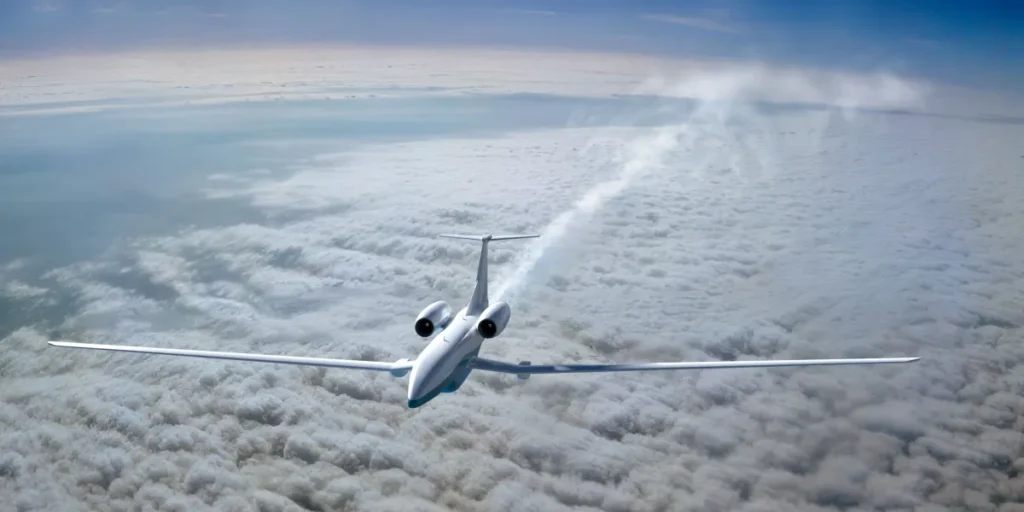
First problem: getting up there. The target is the stratosphere, about 20 kilometers up. That’s way higher than commercial planes fly (they top out around 12 km). Balloons can get there, but they drift wherever the wind takes them, and at scale you’d be littering the planet with balloon debris. So you need aircraft.
But conventional planes aren’t built for that altitude. The air is thin, so you need massive wings to generate lift. One startup called Iris Aero showed a design that looks unsettling—like a water strider, with absurdly long wings on a stubby body. It’s not something you’d see at an airport anytime soon.
Then there’s the question of what to spray. The idea comes from volcanoes: sulfuric acid from eruptions cools the planet temporarily. But sulfuric acid is sticky and heavy to haul up there. So researchers are trying to find a better precursor chemical. The University of Chicago, a leading institution in this space, is working on the formula. It’s not just a matter of dumping stuff in the sky and hoping for the best.
What strikes me is how much this shifts the conversation. When geoengineering was just models and simulations, it felt abstract. But now that people are designing actual aircraft and testing chemicals, it becomes real. And that raises uncomfortable questions.
There are obvious risks: shifting monsoon patterns, winners and losers across the globe, governance nightmares. Who decides when to deploy this stuff? A single nation? A company? Some billionaire with a grudge against heat waves?
Proponents of research argue we need to understand the technology before we can make informed decisions. They draw a line between studying it and actually using it. But I’m not sure that line holds up when the research produces practical engineering blueprints. If someone publishes a detailed guide on building a stratospheric injection aircraft, it’s not hard to imagine a rogue actor or a desperate nation running with it.
Some experts told James this shift requires more oversight. Others called the research outright dangerous. Shuchi Talati from the Alliance for Just Deliberation offered a nuanced take: we need to think about who benefits and who gets hurt. That’s the kind of conversation we should be having, not just “can we build it?”
So yeah, solar geoengineering isn’t an emergency brake. It’s a Rube Goldberg machine that might break the planet in new ways while we’re trying to fix it. And we’re still figuring out how to build the first part.
Comments (0)
Login Log in to comment.
Be the first to comment!