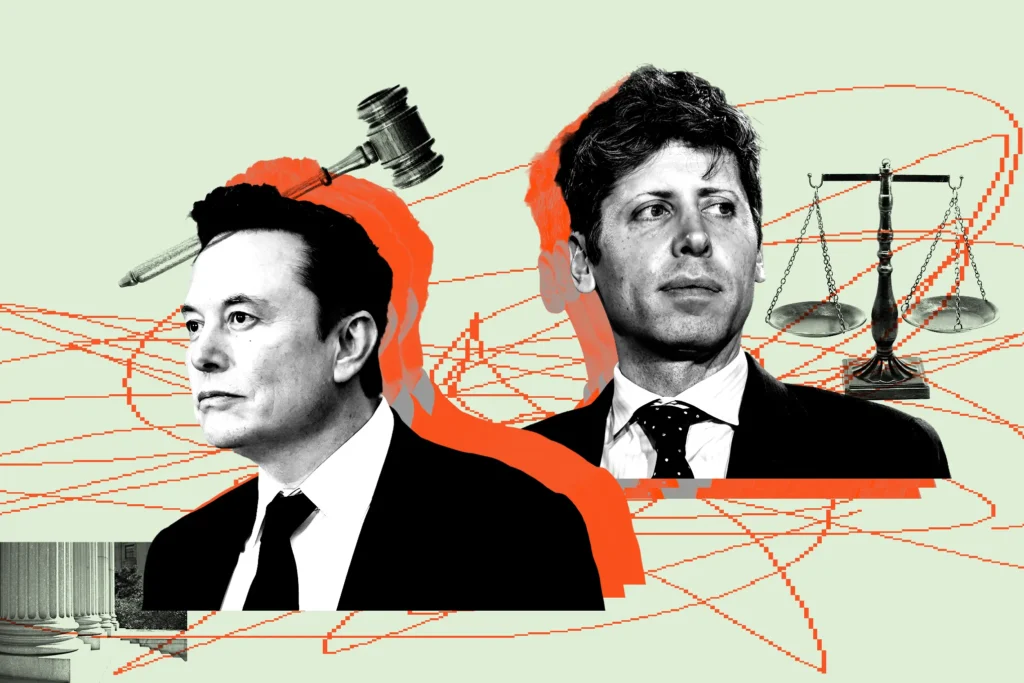

Sam Altman and Elon Musk are about to face each other in court, and the outcome could reshape one of the most important companies in tech right now.
Jury selection kicks off on April 27th for Musk’s 2024 lawsuit against OpenAI. The core accusation: OpenAI abandoned its founding promise to develop AI for humanity’s benefit and instead chased profits. Musk was a cofounder, remember, and he claims Altman and Greg Brockman tricked him into funding the company, then pivoted hard toward commercializing everything.
OpenAI’s response is blunt — they call the lawsuit “a baseless and jealous bid to derail a competitor.” And honestly, it’s hard to ignore that Musk now runs xAI, which built Grok as a direct rival to ChatGPT. Timing is suspicious, but that doesn’t mean the lawsuit is completely without merit.
Musk is asking for Altman and Brockman to be removed from their roles. He also wants OpenAI to stop operating as a public benefit corporation. And if he wins, he’s demanding up to $150 billion in damages — money that would go to OpenAI’s nonprofit arm. That’s a staggering number, even by Musk standards.
Right before the trial, Musk dropped the fraud claims against Altman and OpenAI. That simplifies things a bit, but the core breach-of-contract and mission-abandonment arguments are still on the table.
What makes this trial particularly messy is the history. Musk and Altman cofounded OpenAI in 2015 with a clear nonprofit mission. Musk left the board in 2018, and since then OpenAI has transformed into a capped-profit entity, taken billions from Microsoft, and launched ChatGPT into the mainstream. The original vision — open, transparent, safe AI — feels like a distant memory.
I’ve been watching this saga unfold for years, and it’s always felt like a personal grudge dressed up as a legal dispute. But the stakes are real. If Musk wins, it could force OpenAI to restructure, potentially unwind its commercial deals, and put Altman’s leadership in serious jeopardy. If OpenAI wins, it sets a precedent that pivoting from nonprofit to profit-driven is legally fine as long as you don’t explicitly defraud early backers.
Neither outcome is clean. And neither Musk nor Altman comes out looking great here. Musk is using the courts to attack a competitor he helped create. Altman is defending a company that has become increasingly secretive and profit-focused, far from the transparent nonprofit that attracted early talent and donations.
The trial is going to be a spectacle. Both sides have deep pockets and strong legal teams. Expect a lot of dirty laundry, internal emails, and conflicting narratives about what “benefiting humanity” actually meant in 2015 versus what it means today.
Whatever happens, this case will be studied for years. It’s a bellwether for how AI companies navigate the tension between mission and money — and whether founders can be held accountable when they change course.
Comments (0)
Login Log in to comment.
Be the first to comment!