
Google is at it again, shoving AI into places where search already works fine — but this time, it might actually be useful.
The company is testing a new way to search on YouTube that feels more like a conversation. Instead of just dumping a list of video thumbnails, the AI pulls in longform videos, YouTube Shorts, and even text snippets about what you’re looking for. It’s rolling out as an experiment for YouTube Premium subscribers in the US who are 18 or older.
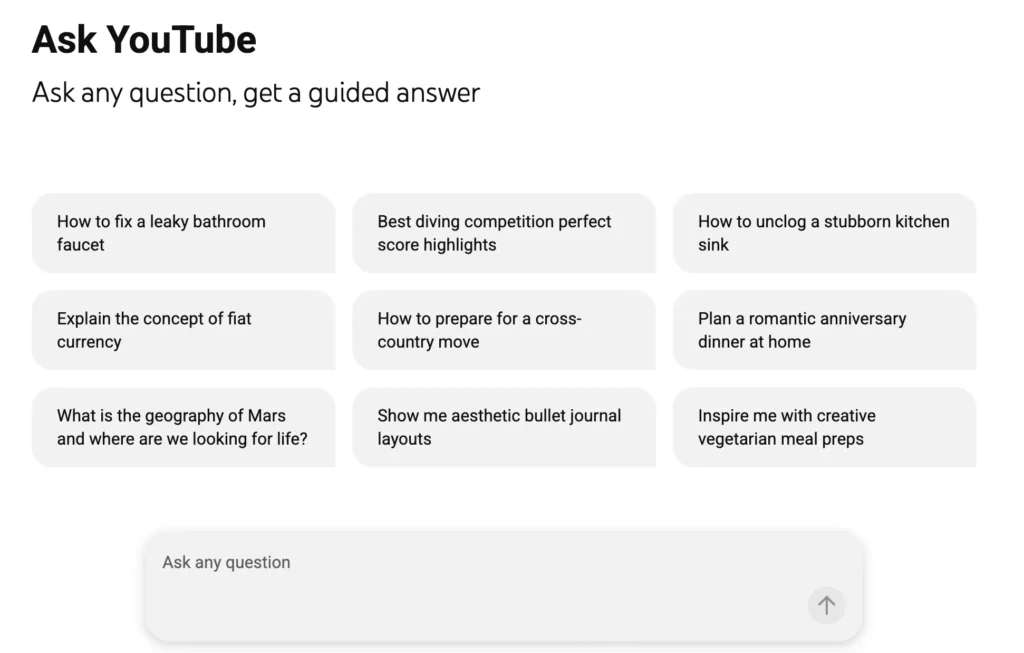
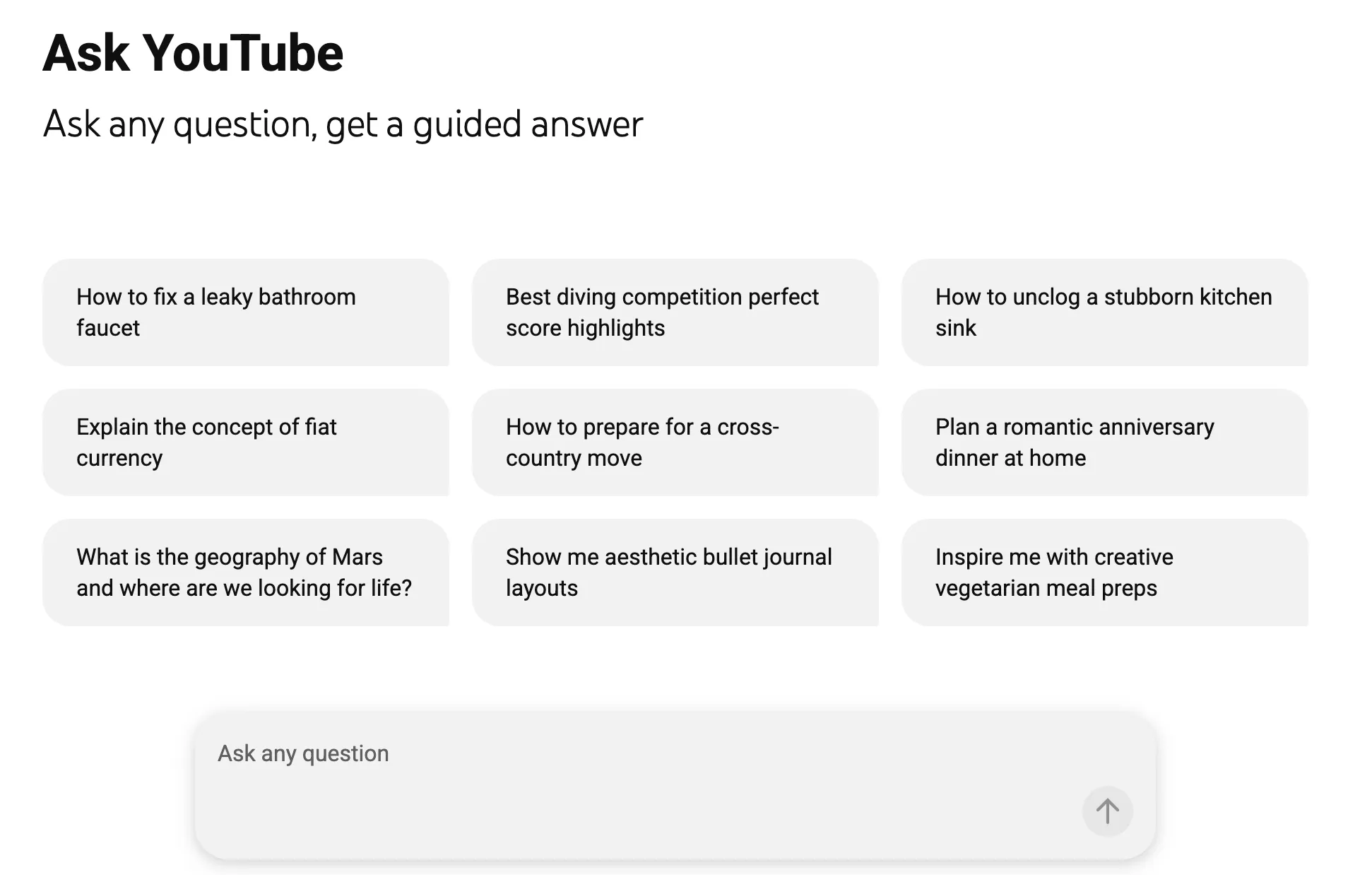
I turned it on for my account. Right away, the search bar showed an “Ask YouTube” button. Tapping it brings up suggested prompts like “funny baby elephant playing clips,” “summary of the rules of volleyball,” and “short history of the Apollo 11 moon landing.” It’s a small touch, but it gives you a sense of what the system expects.
The real question is whether this is better than just typing what you want. YouTube search is already decent at finding specific videos, but it’s terrible at answering questions or finding content across multiple formats. Asking “explain how a car engine works” usually gives you a mix of 10-minute explainers and random vlogs. This AI mode tries to surface the most relevant longform video, a Short that covers a key point, and a text summary so you don’t even have to watch anything if you don’t want to.
That’s the part I find interesting. Google is essentially treating YouTube as a knowledge base, not just a video library. The AI is pulling from transcripts, titles, descriptions, and maybe even comments to build a coherent answer. It’s a bit like what Perplexity does, but trained on YouTube’s massive catalog of spoken and written content.
Is it perfect? No. I asked it about a niche hobby — restoring vintage typewriters — and it gave me a solid video from a small channel I’d never seen, plus a Short from a guy who repairs them. That’s better than I expected. But when I asked something more ambiguous like “best budget laptops 2026,” it defaulted to the usual suspects: big tech reviewers, sponsored content, and a few random listicles. The AI didn’t seem to weigh recency or credibility particularly well.
Also, let’s be real: YouTube Premium subscribers are already paying to avoid ads and get background play. Adding an AI search mode is a nice perk, but it’s not going to convert anyone who’s on the fence. The real test will be if this rolls out to free users, or if Google keeps it behind the paywall as a differentiator.
I’ve seen this kind of conversational search tried before — Microsoft’s Bing Chat (now Copilot) tried to do something similar with web results, and it was a mess of hallucinations and weird tangents. Google’s approach here feels more restrained: it’s not generating new facts, it’s surfacing existing content. That’s a safer bet, but it also means the quality depends entirely on how good YouTube’s content actually is.
For now, it’s an experiment. If you’re a US-based YouTube Premium subscriber over 18, you can toggle it on in settings. I’d recommend trying it with a few queries you already know the answer to, just to see if it surprises you. It surprised me once or twice, and that’s more than I can say for most AI features Google has shoved into its products lately.
Comments (0)
Login Log in to comment.
Be the first to comment!