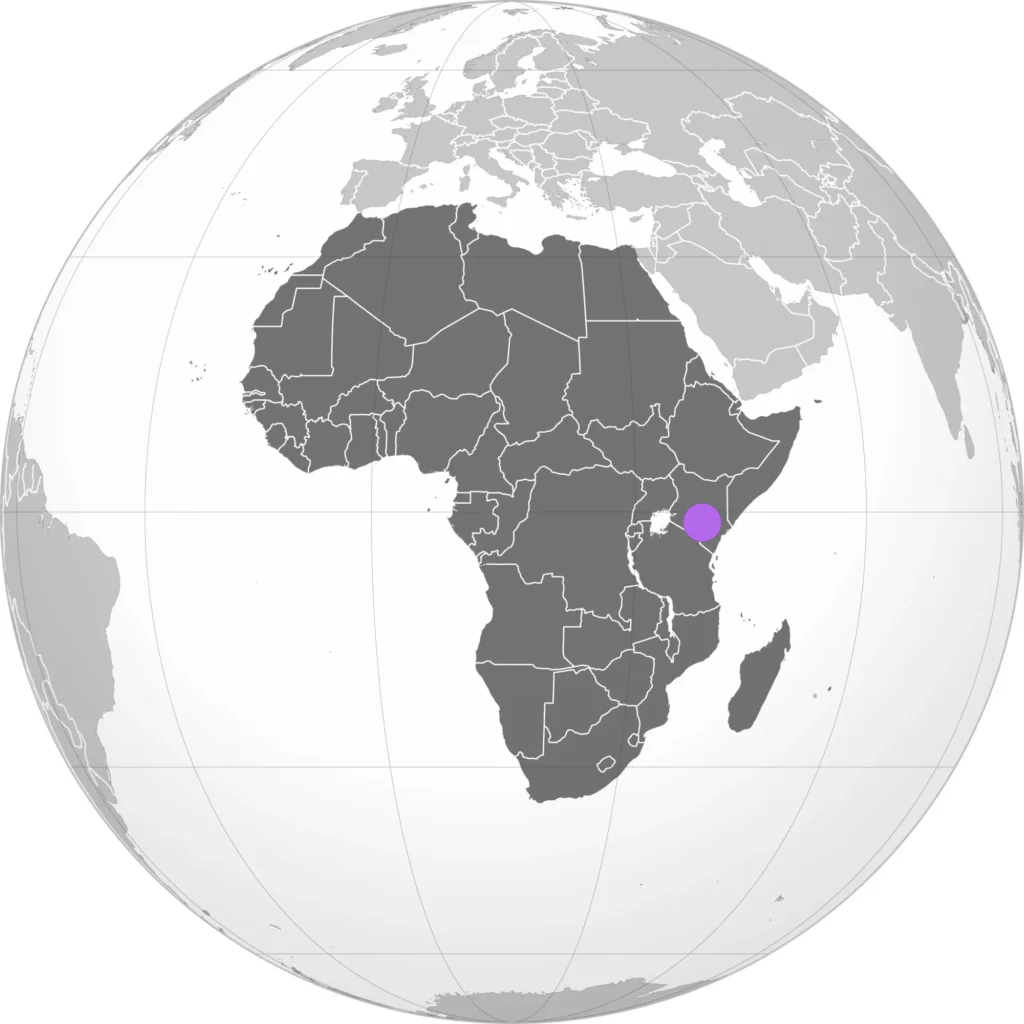

Nairobi, Kenya
Most of Kenya’s power grid already runs on renewables. But with a quarter of communities still lacking centralized electricity, the country is betting on off-grid solar to hit universal access by 2030 without blowing up emissions. The economics have shifted hard in solar’s favor: a couple years ago, a panel cost about $3 a watt. Now it’s down to cents.
I rode out to the margins of Nairobi with Matt Carr, CEO of Agsol, to visit one of his customers. We passed high-rises, hardware shops, and small plots growing corn and potatoes before pulling up to a street-side stall run by Milcah Wanjiru. She sells milk packets, bread, matches — but her real business is milling corn flour for ugali, the Kenyan staple. In the middle of her small shop sits a milling machine on three adjustable legs.
“Whenever customers came to mill their grain, they asked for other goods,” she told us. “And this is how I got to stock these other items.”
Shops with grain mills are common in rural areas and low-income neighborhoods, even inside the city. Most of them burn diesel. Hers runs on solar or grid power, whichever is available.
The machine itself has quirks. Wanjiru complained that grains sometimes get stuck in the feed chamber, jamming the whole thing. Carr explained that the mill automatically slows down if the grain is damp — the pulverizing hammers inside try to squeeze out as much flour as possible, which can cause the blockage. Fair trade-off, maybe.
Overall, she’s happy. She’s been using it since December 2025, and it’s made running her business cheaper. According to Carr, about 40% of what diesel-powered mill owners charge customers goes straight to fuel costs. Agsol’s solar mill can be up to 80% more profitable once the initial $1,300 is paid off — which takes six to twelve months. Wanjiru also likes that, unlike diesel models, hers can handle very small amounts of grain. That’s brought in new customers.
Carr launched the first Agsol product in Kenya in 2018 and has raised over $4 million, much of it through a UK government program supporting clean energy in the region. Last year they sold 530 units. Orders have come from as far as Mozambique and Angola.
As we left, Wanjiru turned back to her burlap sacks — peanuts, mung beans, rice, millet — and scooped some onto a scale for a waiting customer. No fanfare. Just work.
Comments (0)
Login Log in to comment.
Be the first to comment!