
Joyce is a native New Yorker. She didn’t think finding her first solo apartment in the city would be easy, but she also didn’t think it’d be “hell.” After touring a string of tiny, overpriced places she flatly calls “shitholes,” she finally spotted what looked like her dream apartment: a reasonably priced studio in Manhattan.
“It was big and airy, and there was a fireplace,” she told me. The kitchen was small but well-equipped, recently renovated by the looks of it. She dropped everything to go see it. When she arrived, the landlord told her five other women, all around her age, had viewings lined up right after hers.
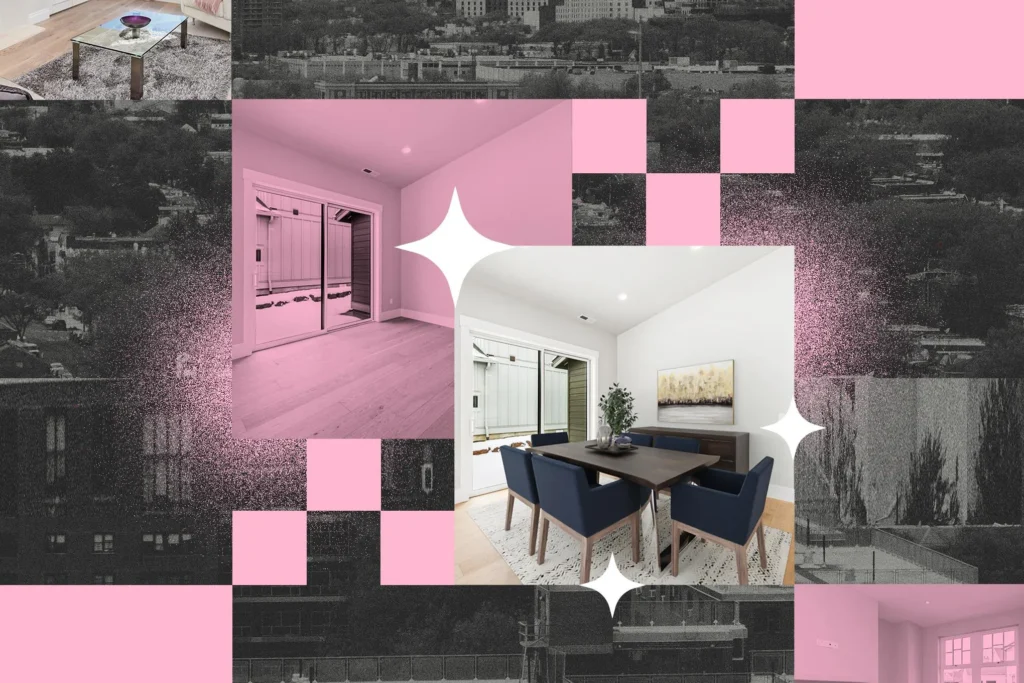
“I get in, and it’s not the same apartment,” Joyce said. The photos online had been virtually staged — AI had added furniture, widened the rooms, even painted in a fireplace that didn’t exist. The real unit was cramped, dark, and smelled like old carpet. She wasted an afternoon and a subway fare on a mirage.
This isn’t an isolated case. Virtual staging has been around for years, but AI has made it cheaper and more convincing. Landlords and real estate agents can now upload a photo of an empty room, and the software fills it with tasteful sofas, plants, and warm lighting in seconds. The result looks like a spread from Architectural Digest. The reality is often a sad, beige box.
I get the appeal from a seller’s perspective. An empty room photographs poorly — it feels cold and uninviting. A staged room helps buyers or renters imagine living there. But there’s a line between helping someone visualize and straight-up lying. When the AI adds a fireplace that never existed, or stretches the room to make it look twice as wide, that’s not staging. That’s deception.
The problem is worse in rental markets, where people are already desperate. In cities like New York, San Francisco, or London, renters are competing for scarce units. They don’t have the luxury of being picky. So when they see a listing that finally looks decent, they jump. And then they show up to a place that feels like a bait-and-switch.
Some platforms are starting to crack down. Zillow and Redfin have policies requiring labels on virtually staged photos. But enforcement is spotty, and smaller listing sites often don’t bother. Even when a photo is labeled “virtually staged,” the average renter might not realize how much the AI has altered the space. It’s not just a rug and a lamp — it’s a whole fake reality.
I’ve been renting for over a decade, and I’ve walked into my share of disappointments. But what’s happening now feels different. The AI is too good at creating plausible fakes. A few years ago, you could spot a staged photo because the furniture looked weirdly proportioned or the lighting was off. Now, the software generates images that look like they were shot by a professional photographer. You have to look for tells: no personal items, weird shadows, or a layout that doesn’t quite make sense.
Joyce eventually found a place — a smaller studio in Brooklyn that was honest about its size. But she wasted weeks chasing AI-generated fantasies. “I feel like I’m dating apps for apartments,” she said. “Everything looks great in the profile, and then you meet in person and it’s nothing like the picture.”
That’s the crux of it. AI is making it easier to sell an impossible dream. For renters already stretched thin, it’s just another way the system grinds them down. The tech isn’t going away, but maybe we need better rules — or at least a healthy dose of skepticism before we click “schedule viewing.”
Comments (0)
Login Log in to comment.
Be the first to comment!