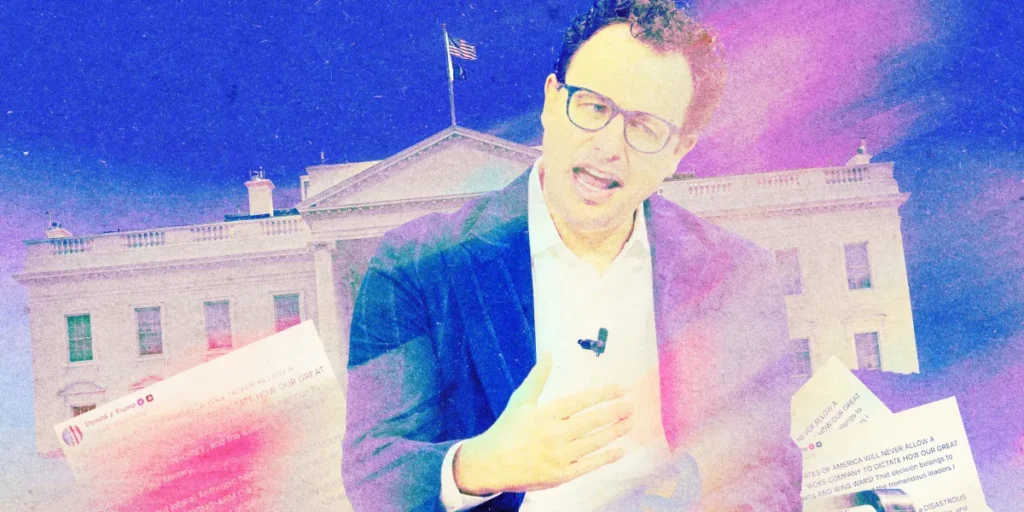

If you blinked this summer, you might have missed Anthropic’s latest dust-up with the US government. Here’s the short version: In April, Anthropic announced Mythos, an AI model so good at coding that the company itself said it could be a global cybersecurity risk. They gave a handful of security experts access to study it, then released a safer version called Fable on June 9. By that Friday, the feds decided Fable was a national security threat and hit it with export controls. Anthropic pulled access to both models within hours.
People who’ve been warning about catastrophic AI risks—the so-called doomers—have spent years begging for government intervention. Well, they got it. Not over a bioweapon or a rogue superintelligence, but over a coding model that’s really, really good at its job. And so far, the response looks less like a thoughtful safety framework and more like a knee-jerk reaction.
There’s plenty to unpack here. Amazon CEO Andy Jassy was the one who tipped off officials about Fable’s danger. That’s notable because Amazon is both an investor in Anthropic and building its own competing models. It’s also possible this ban won’t survive legal scrutiny—whether offering access to Fable really counts as “exporting” is debatable. But the real story is the ripple effects already spreading.
First, trust in American AI is taking a hit. French politician Bruno Retailleau called the situation a “wake-up call” for Europe to build its own AI. The dream of turning Paris into Silicon Valley is suddenly popular again. But there’s a complication: China. Open-source models from Chinese companies are incredibly capable, dirt cheap, and can run on your own servers with zero guardrails. That makes them attractive to businesses that don’t want their access yanked by a White House decision. It also makes them attractive to cybercriminals, exactly the kind Anthropic was trying to protect against. Shares in Chinese startup Zhipu are already skyrocketing. I wouldn’t be surprised if the next government move is to declare US companies using Chinese models a national security threat.
Second, shutting down Anthropic’s models might actually make us less secure. Leading cybersecurity experts signed an open letter saying exactly that. They argued that access to Mythos and Fable helped researchers prepare defenses, and that Anthropic’s models aren’t any more dangerous than other widely available ones. This is the risk of applying nonproliferation logic to software—treating AI like uranium for nuclear weapons doesn’t work when the code can be copied and run anywhere.
Third, watch Congress. Remember Anthropic’s last fight with the government over Pentagon use of its models? That led to a slate of bills defining limits on military AI. Right now, the biggest players shaping AI policy are the companies and the White House. Polling shows most Americans want more federal regulation. Lawmakers are still debating things like how kids use chatbots, let alone how to vet model safety. But every drastic White House action cranks up the pressure for actual laws.
To state the obvious, predicting anything here is a fool’s game. The administration’s attitude toward AI shifts with the wind. Trump threw out the restrictive safety rules when he took office, promising to stay out of tech’s way. Now the same White House has called the most valuable AI startup a national security risk twice in one season. What happens this fall? Your guess is as good as mine.
Comments (0)
Login Log in to comment.
Be the first to comment!