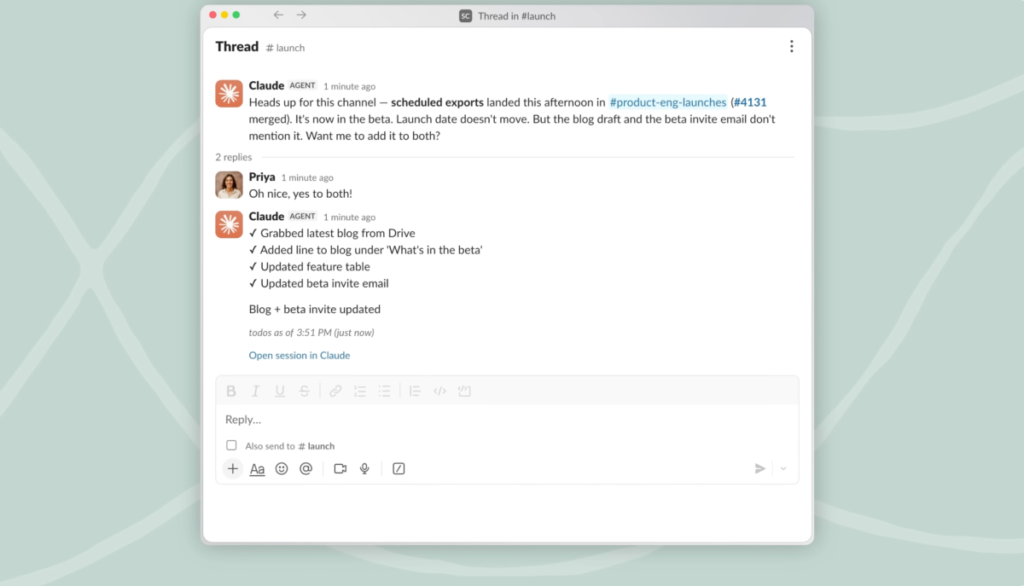

Anthropic just dropped a new Slack integration called Claude Tag, and it’s more interesting than it first appears. On the surface, it’s an always-on AI teammate that lives in your Slack channels, ready to answer questions, summarize threads, or help with tasks. But the real story here isn’t about productivity shortcuts — it’s about what Anthropic gets in return.
The pitch: an AI that knows your company
Claude Tag works like a typical Slack bot: you tag it with @Claude, ask a question, and it responds. The difference is that it maintains context over time. It sees the conversations happening in channels it’s invited to, learns who knows what, and builds an understanding of your team’s projects, jargon, and workflows.
Anthropic frames this as a knowledge management tool. Instead of hunting through old threads or asking around, you just ask Claude. “What’s the status on Project Phoenix?” or “Who owns the deployment pipeline?” — and it answers based on what it’s observed.
That sounds great in theory. In practice, I’ve seen similar promises from other AI assistants before, and the results have been mixed. The key question is how well Claude actually understands context versus just regurgitating recent messages.
The strategic play: data moat
Here’s where it gets interesting. Every interaction with Claude Tag feeds back into Anthropic’s models. The more companies use it, the better it gets at understanding enterprise communication patterns, decision-making processes, and organizational structures. This is a classic data moat strategy.
Anthropic isn’t just selling a tool — they’re training on your company’s institutional knowledge. Over time, Claude Tag becomes stickier because it knows more about your organization than any new employee could. Switching costs go up, and Anthropic’s models improve across the board.
I’m not saying this is malicious. Every AI company does this to some degree. But enterprise buyers should be aware that the value proposition isn’t just about today’s productivity gains — it’s about Anthropic building a better product using your data.
What it actually does well
To be fair, the implementation seems solid. Claude Tag can:
- Answer questions based on channel history
- Summarize long threads or meetings
- Help draft messages or documents
- Route questions to the right people
- Maintain awareness of project status across channels
The always-on nature is a genuine differentiator. Most AI assistants require explicit context — you paste in a conversation or upload a document. Claude Tag just… knows. If you’ve been discussing a bug in #engineering for three days, it can reference that without you re-explaining everything.
Where it falls short
But there are real concerns. Privacy is the obvious one. Having an AI bot that absorbs every message in a channel means sensitive information is being processed and stored by a third party. Anthropic says data is encrypted and used only for model improvement, but enterprise security teams will want more granular controls.
Then there’s the accuracy problem. I’ve tested similar features from other vendors, and they often hallucinate context. Claude might confidently state that “the deployment is scheduled for Friday” when that was actually a rejected proposal from two weeks ago. The always-on nature means it’s always learning, but it’s also always potentially learning the wrong things.
And finally, there’s the creep factor. Knowing an AI is silently reading every message might change how people communicate. Informal jokes, offhand comments, or sensitive discussions could be captured and potentially resurfaced later. That’s a cultural shift that teams need to navigate.
The bottom line
Claude Tag is a smart product move from Anthropic. It solves a real problem — fragmented institutional knowledge — while building a defensible data advantage. But it’s not a no-brainer. Companies need to weigh the productivity benefits against privacy risks, accuracy concerns, and the long-term implications of feeding their internal communications to an AI model.
I’d recommend starting with a single team or project, not rolling it out org-wide. See how it handles your specific context before committing. And read the data policy carefully.
Comments (0)
Login Log in to comment.
Be the first to comment!