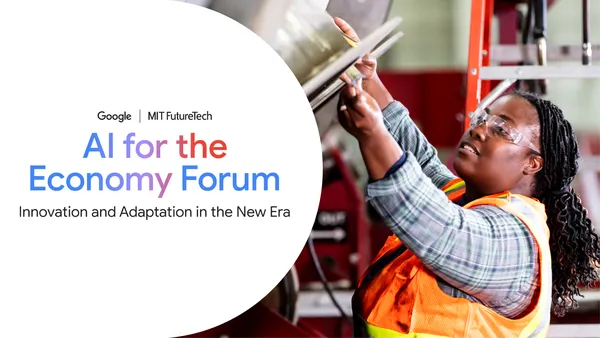

Google and MIT FutureTech just hosted the first AI for the Economy Forum in Washington D.C. The premise, as James Manyika put it, is refreshingly honest: neither the benefits nor the risks of AI are automatic. We can shape how this plays out, but that requires companies, workers, governments, and researchers to stop talking past each other.
I’ve been to too many of these forums where everyone nods along and nothing changes. This one at least came with actual money and programs attached.
New research money, not just white papers
Google’s AI & Economy Research Program is funding external economists through a Visiting Fellows program. MIT’s David Autor is already on board, which is a solid get. The Digital Futures Project produced some genuinely useful findings from Ben Armstrong and Julia Shah: the most successful AI deployments minimize drudgery, promote learning, and foster collaboration. That sounds obvious, but most companies still treat AI as a cost-cutting hammer.
The new round includes Google.org funding and Cloud credits for researchers studying AI’s impact on labor markets, manufacturing, healthcare, and the policy environments needed to actually help workers. They’re also expanding internal research on generative AI’s effect on knowledge-worker productivity and the economics of AI agents.
The advisory board reads like an economics Nobel shortlist: Michael Spence, Dame Diane Coyle, and Mohamed El-Erian. That gives the work credibility, though I’d like to see more diversity in who gets funded, not just who advises.
Training that might actually matter
The training side is where this gets real. Google.org is funding programs to train healthcare workers and create apprenticeships in high-demand fields. The details are sparse in the announcement, but the direction is right. We’ve had years of “AI will create new jobs” talk with very little concrete retraining infrastructure.
What I want to see is whether these programs reach beyond the usual tech hubs. Washington D.C. forums are fine, but the workers who need retraining aren’t in D.C. conference rooms.
The bottom line
This forum and the investments are a step in the right direction. Google is putting real resources behind understanding AI’s economic impact and building skills. The test will be whether the research translates into policy changes and whether the training programs actually place people in better jobs.
I’ll be watching the research outputs closely, especially the work on AI agents and productivity. That’s where the real disruption is coming, and we need better data than the usual vendor surveys.
Comments (0)
Login Log in to comment.
Be the first to comment!