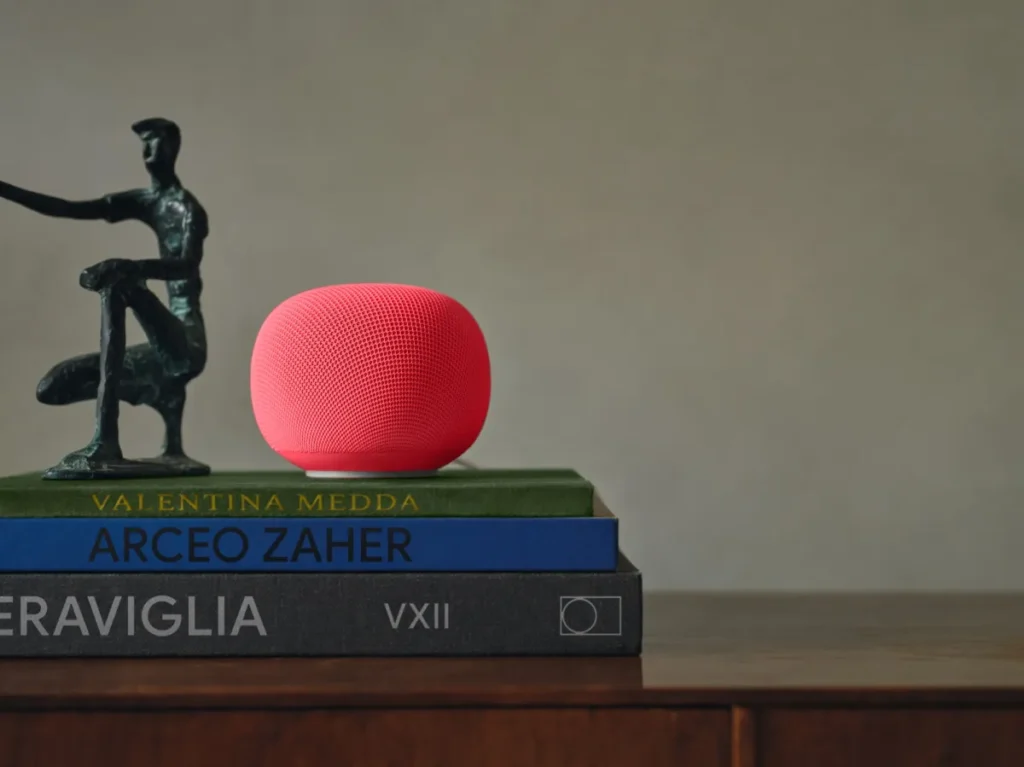

Google is finally giving its smart speaker a serious rethink, and the headline feature is swapping out the old Google Assistant for Gemini. The new $99.99 Google Home Speaker is the first device where the company has fully bet on generative AI to carry the conversation, instead of just waiting for you to bark “set a timer” or “what’s the weather.”
I’ve been using smart speakers since the early Echo days, and the biggest frustration has always been the same: you have to speak to them like a robot talking to another robot. “Alexa, turn on the kitchen lights.” “Hey Google, play jazz.” It works, but it’s stiff. You can’t just say “I’m cold” and expect the thermostat to go up. Google’s pitch with Gemini is that you can actually talk to this thing like a person, and it’ll figure out what you mean.
The hardware itself is pretty standard for the price point: a fabric-wrapped cylinder with a light bar, similar to the old Nest Audio but with a slightly wider sound stage, according to early hands-ons. The real change is under the hood. Gemini runs locally for basic queries and offloads complex reasoning to the cloud, which means it should respond faster for simple stuff like music playback or timers, while still being able to handle open-ended follow-ups.
Google has been talking about “conversational” assistants for years, but this is the first time the product actually feels different. During a demo, someone asked the speaker “what’s a good recipe for dinner?” and then immediately followed up with “but I don’t have any chicken.” The speaker understood the context and adjusted its suggestion. That’s the kind of thing the old Assistant would have completely failed at.
There are some obvious caveats. Privacy-wise, you’re trusting Google with even more conversational context now, and the company says it’ll store transcripts by default unless you opt out. Also, the local processing is limited to a small set of commands, so anything creative or multi-step still hits the cloud, which introduces latency. In practice, that means you might still get the occasional “hmm, I don’t understand” when you try something too abstract.
But this is a genuine step forward. The smart speaker category has been stagnant for years, with most improvements being incremental audio quality bumps or adding a screen nobody asked for. Google is taking a real risk by replacing the core interaction model entirely. If it works, it could make the smart speaker actually useful for more than timers and music. If it flops, it’ll be another example of a company shipping half-baked AI features just to say they did.
I’m cautiously optimistic. The price is right, the concept makes sense, and Google has the infrastructure to pull this off. But I’ll reserve judgment until I’ve lived with one for a week. For now, it’s the most interesting smart speaker launch in years, and that alone is worth paying attention to.
Comments (0)
Login Log in to comment.
Be the first to comment!