
It’s cold, it’s loud as hell, and I’m not exactly relaxed. I’m standing 300 meters beneath the North Sea in a damp, smelly cave, acutely aware that millions of tons of seawater are pressing down above me at over 500 psi. Picture a baby rhino balanced on a postage stamp. Only some seriously good engineering keeps me from being flattened.
My safety goggles are fogged up. A few hundred meters away, someone’s about to blow up a rock wall. Earlier, I got a safety briefing and a hard hat. Geologist Anne-Merete Gilje deadpans: “Don’t worry—if you don’t make it, we’ll send your stuff back to your office.” Classic Norwegian humor.
I’m here under the Norwegian fjords to see Rogfast—short for “Rogaland Fixed Link”—which will soon be the world’s longest and deepest subsea road tunnel. We’re talking 26.7 kilometers of highway sitting 390 meters below sea level at its deepest point. I wanted to understand how you build something that audacious, and honestly, to remind myself that ambitious engineering still happens. Especially when it feels like nothing big gets built anymore.
Norway already holds the record for the longest subsea tunnel, the 14.4-kilometer Ryfylke. Rogfast will dwarf it. Their expertise has drawn attention from Japan, Spain, Morocco, and even some US states—their reps were due to visit in May, just weeks after I was there. They all want to know how Norway pulls this off.
The short answer: tons of explosives.
This whole project feels like a stubborn middle finger to physics and geology. Tunnel foreman Niclas Brusehed from Implenia, the Swiss firm on the job, told me: “It’s always exciting. Every blast creates a new world.” And it’s not just the blasting—though that alone is epic. There’s the logistics of ventilation shafts, extreme pressure, underground roundabouts, and Norway’s tricky geology. Oh, and the water. So much water.
“This is the longest continuous blast on the sea,” said John Olaf Østerhus, assistant project manager at Implenia. “Never been done before. We can’t buy a book to see how we do this.”
Alright, time to pull my phone out of my safety suit.
On Another Planet
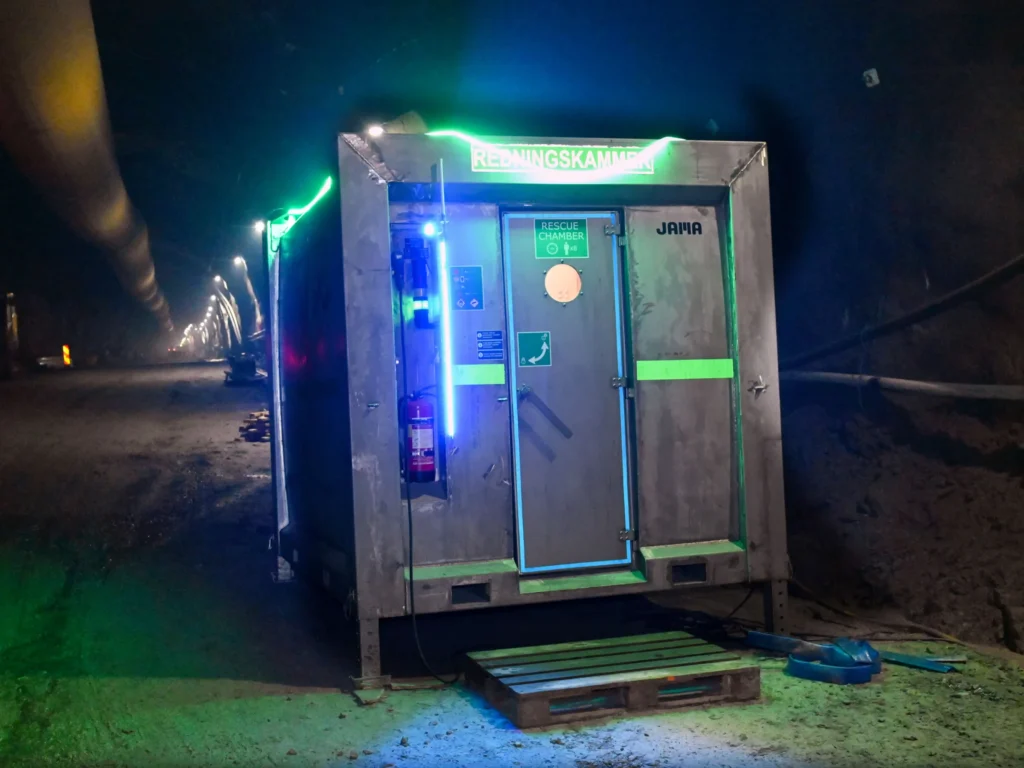
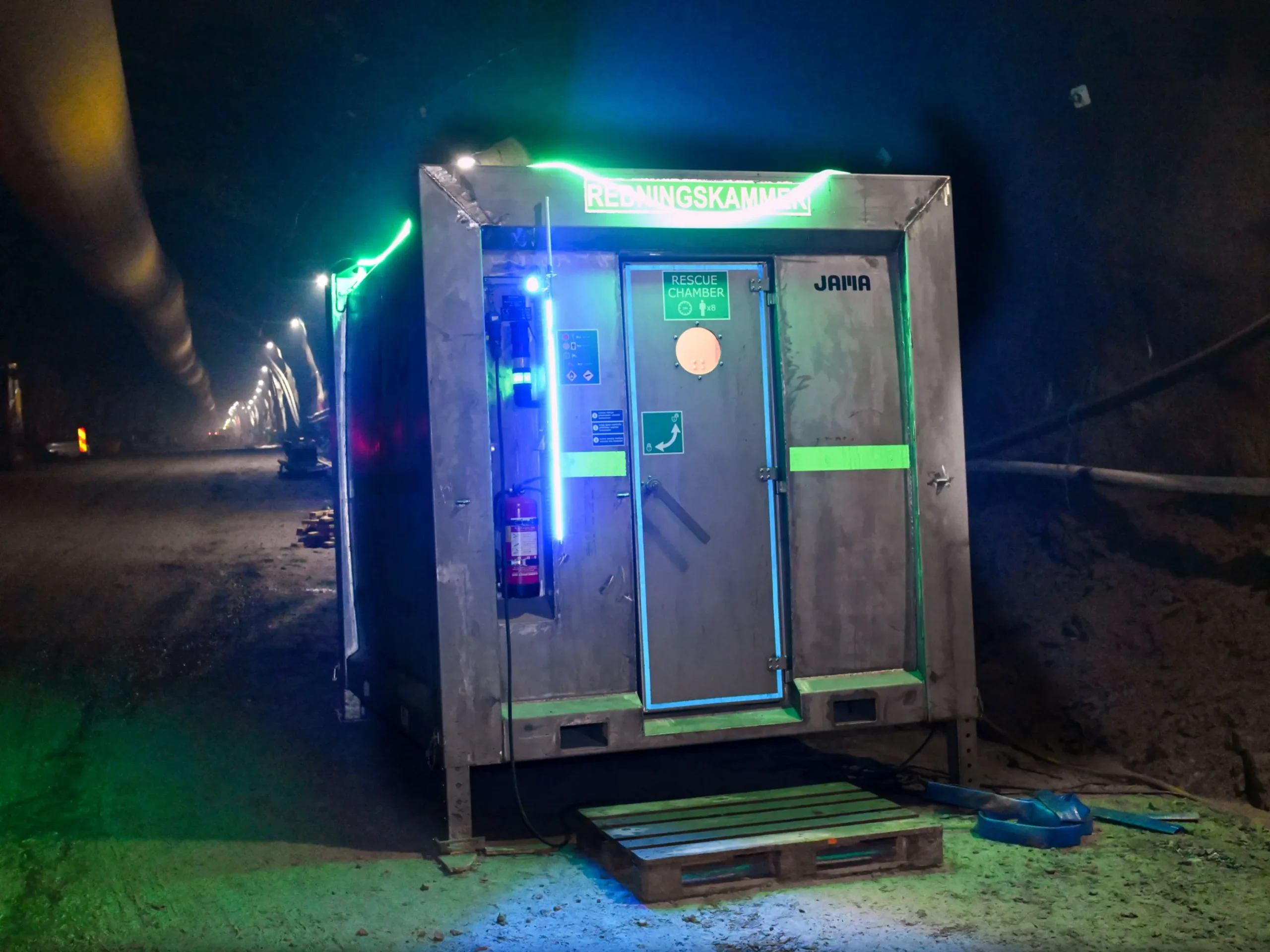
Standing at the rock face where the tunnel hits the seabed feels lunar. A massive slab of stone at the end of a dark, wet, wide passageway lit by sparse electric lights. Giant trucks hauling rock rumble past every few minutes. We pull to the side to let them by. Rescue chambers are dotted throughout the network.
Workers do 12-hour shifts, 6 a.m. to 6 p.m., deep underground where no natural light reaches. Twelve hours of drilling, blasting, mucking out rock. It’s a lifestyle, as Brusehed put it: “You have to be a little bit crazy to work underground all the time.”
The scale of the operation is hard to grasp until you’re inside it. The tunnel is being excavated from multiple points simultaneously, with huge ventilation shafts drilled from the surface to keep air moving. The pressure at depth is intense—not just from the water above, but from the rock itself. Norway’s geology is a mess of ancient gneiss, granite, and unpredictable fault zones. Every blast reveals something new.
Water, Water Everywhere
The biggest headache? Groundwater. The fjords are full of it, and the rock is fractured. Crews pump out millions of liters of water every day. If the pumps fail, the tunnel floods fast. That’s why there are massive pumps and backup systems. And why every worker knows the emergency evacuation plan by heart.
I asked Østerhus what keeps him up at night. “The water,” he said, without hesitation. “We have to seal everything. Grouting is our best friend.” They inject cement-based grout into the rock ahead of the blasting, filling cracks and sealing off water. It’s a slow, meticulous process. One mistake and the whole face could flood.
Why Bother?
Rogfast will connect the cities of Stavanger and Haugesund, cutting travel time from two hours (including ferries) to about 30 minutes. For a country with a lot of coastline and a lot of fjords, subsea tunnels make economic sense. Ferries are slow, weather-dependent, and expensive. Tunnels are a one-time investment that pay off over decades.
But there’s also a certain national pride. Norway has been building subsea tunnels since the 1980s. They’ve gotten good at it. Rogfast is the next step—a statement that they can still do big things.
The Human Element
I spent a few hours underground, and by the end, my ears were ringing and my boots were soaked. The workers I met seemed genuinely proud of what they were building. They talked about the tunnel like it was a living thing. “Every day it changes,” one driller told me. “You never get bored.”
That’s the thing about big engineering projects. They’re not just technical challenges. They’re human ones. People have to want to do this kind of work, to wake up at 4 a.m. and descend into a dark hole for 12 hours. The pay is good, sure. But there’s something else—a sense of purpose. Building something that will outlast you.
Rogfast is scheduled to open in 2033. By then, it will be the deepest, longest subsea road tunnel on Earth. I’ll be curious to drive through it one day, knowing I saw it being born.
Comments (0)
Login Log in to comment.
Be the first to comment!