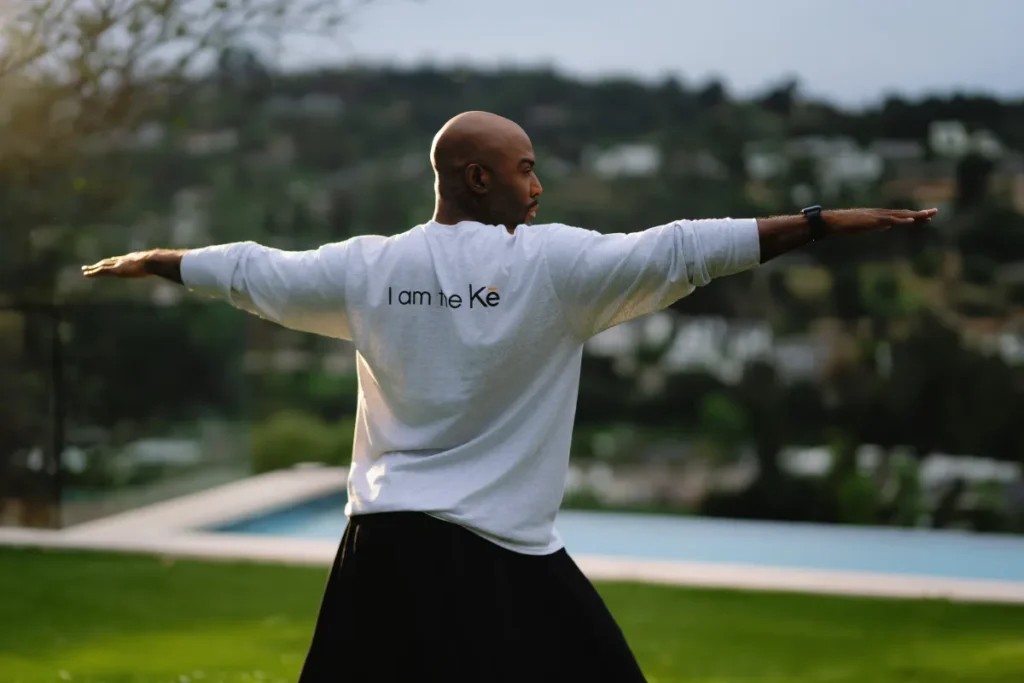

Karamo Brown, the guy who makes grown men cry on Queer Eye with a single well-timed pep talk, is now bringing that energy to an app. His new wellness platform, Kē, launched this week, and it comes with a twist: an AI digital clone of himself.
Brown spent the last year and a half working on his own life — fitness, nutrition, meditation, sobriety, relationships, personal growth. The whole package. And now he wants to help you do the same, but he can’t be there for everyone in person. So he built a bot that sounds like him.
The app itself covers the usual wellness bases: guided meditations, workout plans, meal tracking, journaling prompts. Nothing revolutionary there. Plenty of apps do that. What sets Kē apart is the AI layer. You can have text-based conversations with “Karamo” — or at least a language model trained on his voice, his advice, his catchphrases. It’s supposed to feel like you’re talking to the real guy, minus the travel costs and scheduling conflicts.
I’ve seen this approach tried before. Replika, Woebot, even that short-lived AI therapist from a few years back. The difference here is the celebrity branding. Brown’s whole appeal is his authenticity — he’s the guy who sits down with you, looks you in the eye, and tells you the hard truths with love. Can an AI replicate that? Partially, maybe. But there’s a reason therapy works best with a real human in the room.
That said, the tech behind Kē is more sophisticated than I expected. The model doesn’t just spit out generic affirmations. It remembers context from previous conversations, adapts its tone based on your mood, and even calls you out when you’re making excuses. That last bit is pure Karamo. I tested it with a few scenarios — feeling stuck in a career rut, struggling with consistency in workouts — and the responses felt surprisingly on-brand. Not perfect, but better than a lot of chatbot therapy I’ve seen.
The pricing is subscription-based, which is standard for this space. No word yet on whether there’s a free tier, but I’d guess they’ll offer a trial period. The real question is retention. Wellness apps have a notorious churn problem. People download them in January, use them for two weeks, then forget they exist. Kē’s hook is the relationship with the AI version of Karamo. If that bond sticks, it might actually keep people coming back.
There are downsides, and I’m not going to pretend otherwise. First, the AI is still an AI. It can’t read body language, can’t notice the tremor in your voice when you’re lying to yourself. It can only work with what you type. If you’re not honest with the bot, you’re not going to get real help. Second, the privacy concerns. A wellness app collecting intimate conversations about your mental health, your relationships, your darkest moments — that’s a lot of trust to place in a company. Brown seems genuine, but the app is still a business.
I also wonder how much of this is Brown’s actual involvement versus a team of developers and content writers training a model on his public persona. He’s a TV personality, not a machine learning engineer. The authenticity factor only goes so far if the AI starts sounding like a generic coach after a few conversations.
Still, I’m not writing this off. Karamo Brown has built a career on emotional intelligence. If anyone can make an AI coach that feels human, it’s someone who understands what makes humans tick. The app is worth a look if you’re into wellness tech, but keep your expectations grounded. It’s a tool, not a replacement for real human connection.
Comments (0)
Login Log in to comment.
Be the first to comment!