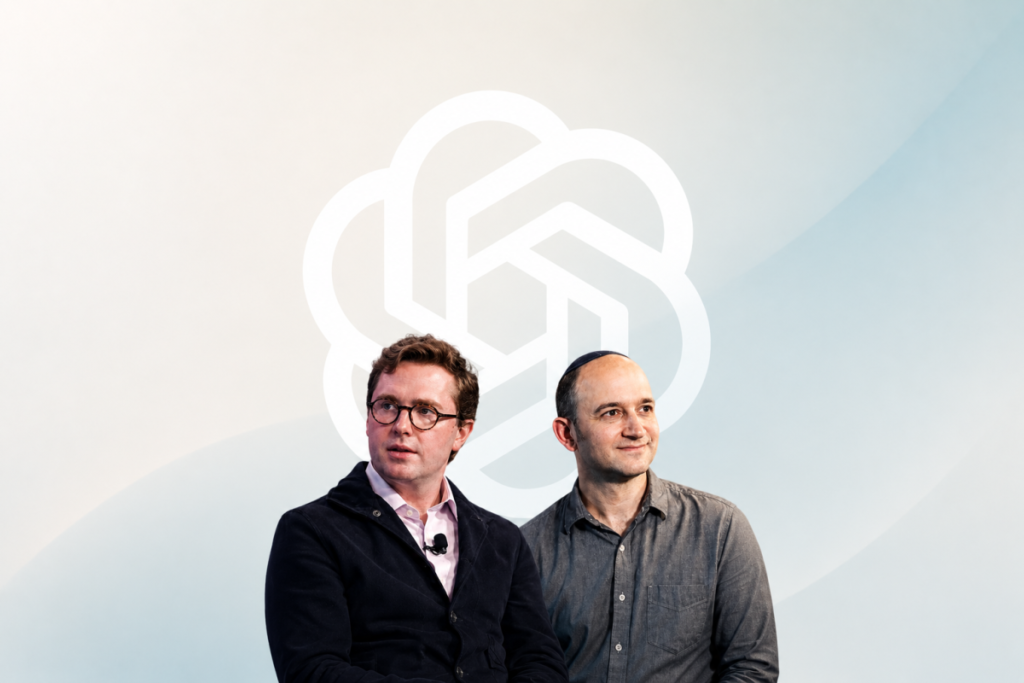

OpenAI is making moves that don’t look random. In the same week, they landed Noam Shazeer — one of the co-inventors of the Transformer architecture — from Google DeepMind, and Dean Ball, who was a key AI policy official under the Trump administration. If you’re tracking the company’s path to an IPO, this is the kind of double play that raises eyebrows.
Shazeer is a big get. The Transformer paper (“Attention Is All You Need”) is basically the founding document of modern generative AI, and Shazeer was right there alongside Ashish Vaswani, Illia Polosukhin, and the rest. He’s been at Google for years, most recently at DeepMind, working on everything from sparse gating in Mixture-of-Experts models to the foundational architecture that powers ChatGPT itself. Landing him is a signal that OpenAI isn’t just resting on GPT-4 or whatever comes next — they want the guy who helped invent the engine under the hood.
But the Dean Ball hire is arguably more interesting from a business and regulatory angle. Ball served as a senior policy advisor on AI at the White House Office of Science and Technology Policy during the Trump years. He’s not some fringe partisan — he was part of the team that shaped the early federal approach to AI governance, including the 2020 executive orders on AI trustworthiness. Bringing him in suggests OpenAI is serious about navigating the regulatory minefield that’s only getting more complex as governments worldwide scramble to set rules around AI safety, copyright, and bias.
Let’s be blunt: OpenAI has been a regulatory target for years. Lawsuits from authors, musicians, and news outlets. Privacy complaints in Europe. The FTC investigation. Having someone who’s been inside the machine — who knows how federal policy gets made and who the key players are — is a pragmatic hedge. Ball can help OpenAI frame its narrative to regulators, anticipate policy shifts, and maybe even shape the conversation before it turns hostile.
The timing matters. OpenAI has been rumored to be eyeing an IPO since late 2025, with talk of a valuation north of $200 billion. That’s enormous, but it’s also fragile. Public markets demand more than just a cool product and a charismatic CEO. They want to see a company that’s built to last — with technical depth, regulatory savvy, and a story that holds up under scrutiny. These two hires check those boxes in very different ways.
Shazeer gives OpenAI technical credibility that’s hard to match. He’s not just a researcher; he’s a legend in the field. When you can say “the co-inventor of Transformers works here,” it’s a powerful recruiting and branding tool. It also signals to investors that the company is still innovating at the frontier, not just cashing in on existing tech.
Ball, meanwhile, gives OpenAI a seat at the policy table. The next few years are going to see a lot of AI legislation — the EU AI Act is already in force, the US is debating frameworks, and other countries are following suit. Having a former White House official on staff means OpenAI can respond to draft rules before they’re finalized, rather than reacting after the fact. That’s a competitive advantage that doesn’t show up on a balance sheet but matters enormously.
I’ll be honest: I’m a little surprised Google let Shazeer go. He’s been there since the Transformer paper days, and DeepMind has been hoarding talent like it’s going out of style. But maybe the allure of working directly on the next frontier — whatever that is at OpenAI — was too strong. Or maybe the pay package was absurd. Either way, OpenAI’s gain is Google’s loss.
As for Ball, I’m curious to see how he navigates the politics. AI policy is deeply polarized right now, with some camps pushing for rapid deregulation and others demanding strict guardrails. Ball’s background suggests he leans toward the “innovation-friendly” side of things, but his actual record is more nuanced than you’d expect from a partisan label. If he can help OpenAI thread that needle — keeping regulators happy without stifling development — he’ll earn his paycheck.
None of this guarantees a smooth IPO. OpenAI still faces existential questions: Can it maintain its technical lead as competitors catch up? How will it handle the cost of inference at scale? What happens if Sam Altman leaves or the board implodes again? But these hires show the company is thinking about the long game. They’re building a team that can handle the technical, political, and financial challenges of being a public company.
For now, I’m watching closely. If OpenAI keeps making moves like this, the IPO narrative shifts from “risky startup” to “serious enterprise.” And that’s exactly what the market wants to hear.
Comments (0)
Login Log in to comment.
Be the first to comment!