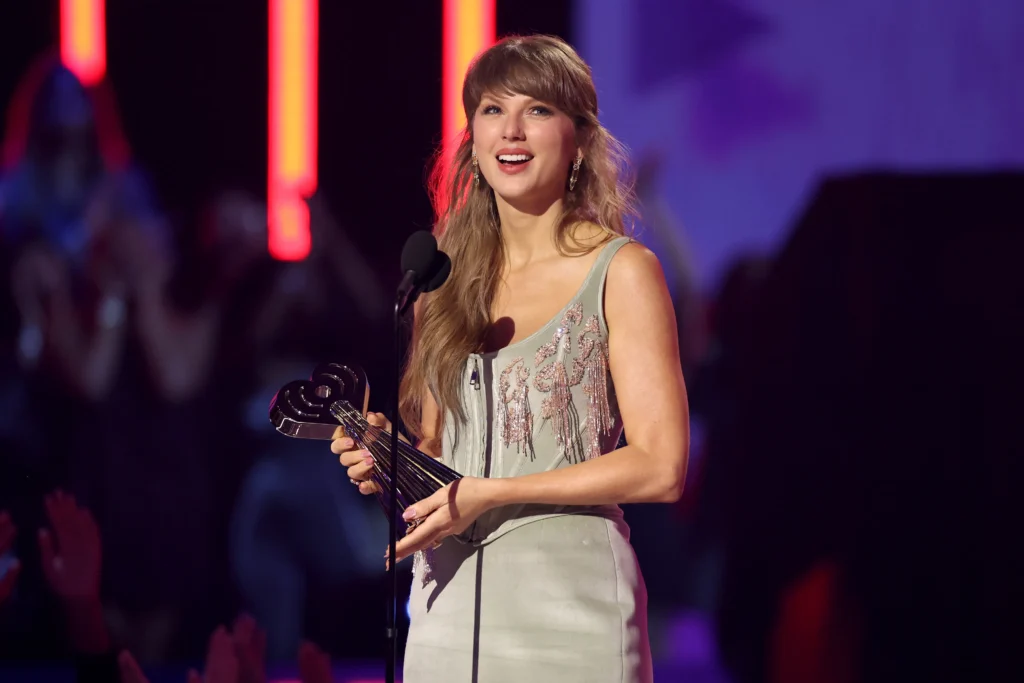

Taylor Swift has been dealing with AI impersonation for years — deepfakes, voice clones, the whole creepy package. Now she’s trying something new: trademarking her own spoken phrases.
Last week, Swift’s team filed trademark applications for two phrases: “Hey, it’s Taylor Swift” and “Hey, it’s Taylor.” The filings, handled by TAS Rights Management, include actual audio clips of Swift saying those lines during a promo for her latest album. The idea is straightforward: if someone else uses those exact phrases in a way that mimics her voice, Swift’s legal team can argue it’s trademark infringement, not just a vague case of identity theft.
Is this going to stop the flood of AI-generated Taylor Swift content? Probably not entirely. But it’s a smarter move than most celebrity attempts to fight this stuff. Trademark law is actually built to handle commercial impersonation — unlike copyright, which gets messy when AI training data is involved, or right of publicity, which varies wildly from state to state.
Here’s the catch: trademark protection only covers commercial use in a way that confuses consumers. If someone posts a funny AI-generated clip of Swift saying something ridiculous on a personal TikTok, that’s probably not trademark infringement. But if a company uses a voice clone in an ad or a paid promotion? Swift’s team now has a much stronger case.
I’ve seen this approach tried before — mostly by musicians trying to protect catchphrases or vocal signatures — but it rarely sticks unless the phrase is genuinely distinctive and tied to a commercial product. Swift’s team is smart to include the actual audio recordings as part of the filing. That makes it harder for a defendant to argue “no one would confuse this random AI voice with Taylor Swift.”
The bigger question is whether this scales. If every celebrity starts trademarking common phrases they happen to say, the USPTO is going to have a headache. “Hey, it’s Taylor” is specific enough. “Hey, it’s” followed by any other name? That’s a minefield.
Still, I respect the move. It’s not a cure-all, but it’s a creative use of existing law rather than waiting for Congress to do something about AI deepfakes — which, let’s be honest, could take another decade. Swift’s legal team is playing the game with the tools they have, and that’s more than most celebrities are doing.
Will it hold up in court? That’s the real test. Trademark law wasn’t designed for AI-generated voice clones, and judges are still figuring out how to apply it. But if Swift wins even one case on this basis, it sets a precedent that could shift how the music industry — and Hollywood — approaches AI impersonation.
For now, it’s a clever gambit. I just hope she trademarked the laugh too. That one’s unmistakable.
Comments (0)
Login Log in to comment.
Be the first to comment!